
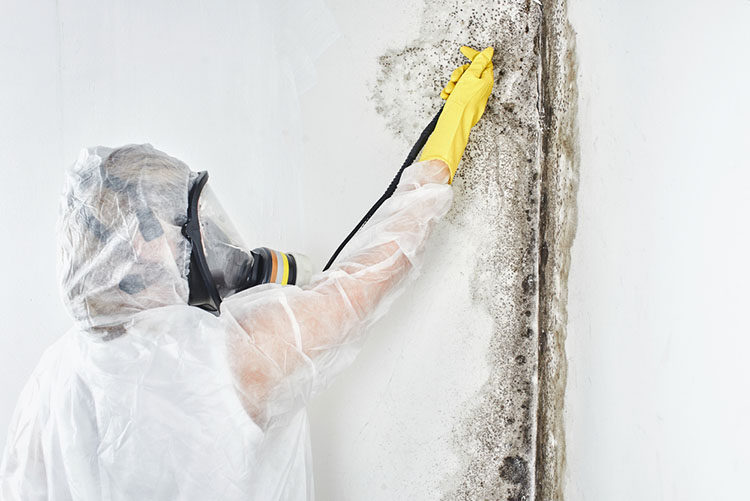
California’s wet winters do not end cleanly. The rain stops, the sun returns, and most employers and building managers assume that the moisture-related risks have passed along with the storms.
In reality, the weeks and months following a wet winter are precisely when hidden moisture problems inside commercial buildings most often become active mold and indoor air quality issues, right as employees and occupants return to full schedules and spend long hours inside.
For employers in Southern California, understanding the relationship between winter rainfall, indoor moisture accumulation, and spring mold growth is not simply a facilities maintenance concern. It is a workplace health, safety, and legal liability issue that deserves proactive attention before symptoms appear and complaints begin.
At Health Science Associates, we provide industrial hygiene and indoor air quality consulting throughout Southern California, and spring is consistently one of our busiest periods for mold assessments and IAQ investigations in commercial facilities.
Why Spring Is Mold Season in Southern California
Mold requires three conditions to establish and grow: an organic food source, appropriate temperatures, and moisture. Building materials provide the food source. Southern California provides the temperatures.
What a wet winter adds is the third ingredient: moisture, and in ways that are not always visible or obvious to building occupants or facilities managers conducting routine walk-throughs.
Water intrudes during winter rains through roof failures, improperly sealed windows, foundation seepage, and condensation forming on cold surfaces within wall assemblies. It accumulates within wall cavities, above suspended ceiling tiles, beneath flooring systems, and within HVAC components that were not designed to handle the moisture loads a wet season delivers.
When warmer spring temperatures arrive, those persistently damp areas become ideal mold growth environments.
According to the U.S. Environmental Protection Agency, mold can begin colonizing damp building materials within 24 to 48 hours of a moisture event under favorable conditions, and the majority of commercial building mold problems go undetected until colonies have been actively growing for weeks or even months.
What Indoor Mold Does to Occupant Health
Mold exposure in commercial workplaces affects occupants in ways that are frequently and frustratingly misattributed to other seasonal causes, including springtime allergies, circulating colds, and general fatigue from busy work periods.
The symptoms that most reliably point toward building-related mold exposure rather than external seasonal causes include persistent respiratory irritation that does not resolve with standard allergy treatment, nasal congestion and eye irritation that is worse during working hours than on weekends, recurring headaches that are concentrated in the workday, and fatigue that improves when employees are away from the building for extended periods and returns within hours of re-entering.
This pattern of symptom improvement away from the building with return on re-entry is one of the most reliable clinical indicators that indoor air quality in the building itself is contributing to occupant health complaints.
For employers, allowing mold-related health complaints to persist without investigation creates real legal exposure under California workplace safety regulations, which require employers to identify and address recognized workplace hazards.
What to Inspect After a Wet Winter
A proactive spring assessment should prioritize the areas most likely to have accumulated moisture during winter weather events. This includes all roof and ceiling areas beneath any penetrations, HVAC equipment access points, or locations where water entry was observed or suspected during the rainy season.
Exterior walls, particularly those surrounding windows or other envelope penetrations where interior water staining was noted during storms, warrant careful evaluation.
HVAC system components, including air handling units, cooling coil assemblies, condensate drain pans, and duct sections located near building envelope penetrations, are common sites for mold colonization that goes uninspected until occupant complaints drive investigation.
Ground-floor spaces with slab-on-grade construction in high soil moisture areas and below-grade mechanical rooms in older commercial buildings deserve particular attention given their structural susceptibility to moisture intrusion.
When Professional Assessment Is Warranted
A professional industrial hygiene assessment is the appropriate response when occupants report building-related health symptoms that fit the profile described above, when visible mold growth or persistent musty odors are present anywhere in the facility, when moisture intrusion was directly observed during winter storms and remediation was incomplete, or when the building carries a history of previous IAQ complaints.
Professional assessment provides objective documentation of conditions, accurate identification of moisture sources and mold types, and a remediation scope that gives contractors clear direction and protects employers from ongoing liability exposure.
Health Science Associates Is Here to Help
Our industrial hygiene and IAQ services at Health Science Associates include comprehensive mold and air quality assessments for commercial facilities throughout Southern California.
Contact Health Science Associates today to schedule a spring IAQ assessment before employee complaints make the investigation reactive rather than proactive.